Quick answer
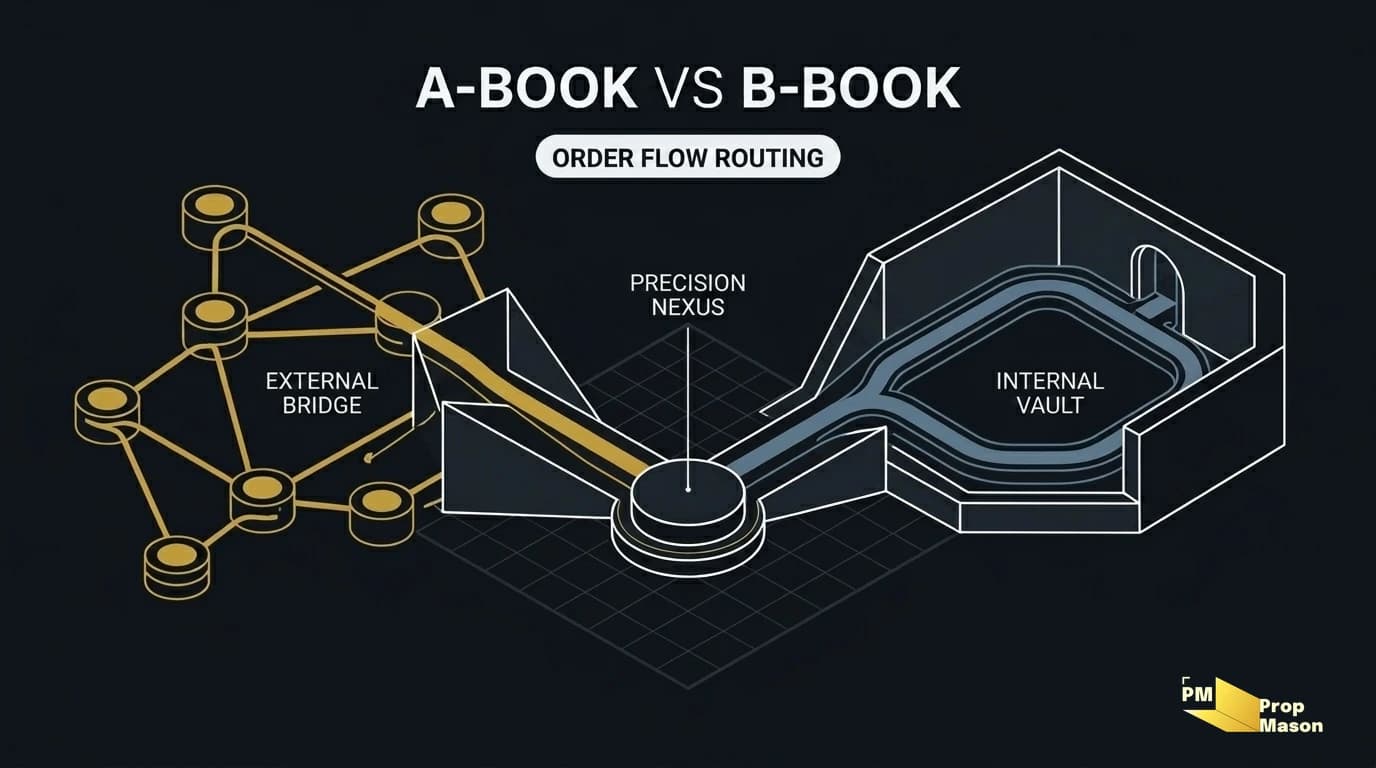
A-book usually means risk is routed or hedged externally. B-book usually means risk is internalized. In a B-book model the firm takes the other side of the trade, so trader losses can become firm revenue; in an A-book model orders are passed to an outside counterparty, so the firm does not gain directly from trader losses.
In retail funded trading, traders should not label a prop firm as A-book or B-book unless the firm clearly discloses it. The practical questions are whether the rules, payout process, conflicts, and account conditions are clear.
When a firm's own terms describe accounts as simulated, an "A-book" label cannot mean that your orders reach a real market; the useful checks are then the payout and payout-denial terms. For example, FTMO describes its services as simulated trading and educational tools (checked 2026-09-28).
| Term | What it means | What to check |
|---|---|---|
| A-book | Orders are passed to an outside market or liquidity provider | Does the firm say so in its own documents? |
| B-book | The firm keeps the risk on its own books | Is there a conflict-of-interest or risk disclosure? |
| Simulated account | Orders do not reach a real market | How payouts are approved and when they can be denied |
Why this topic is easy to misunderstand
Many traders use A-book and B-book as absolute good-or-bad labels. That is too simple.
A firm may use simulated accounts, different legal structures, liquidity relationships, or risk policies. If the official documents do not confirm the model, treat any label as unconfirmed.
What to check instead of only asking A-book or B-book
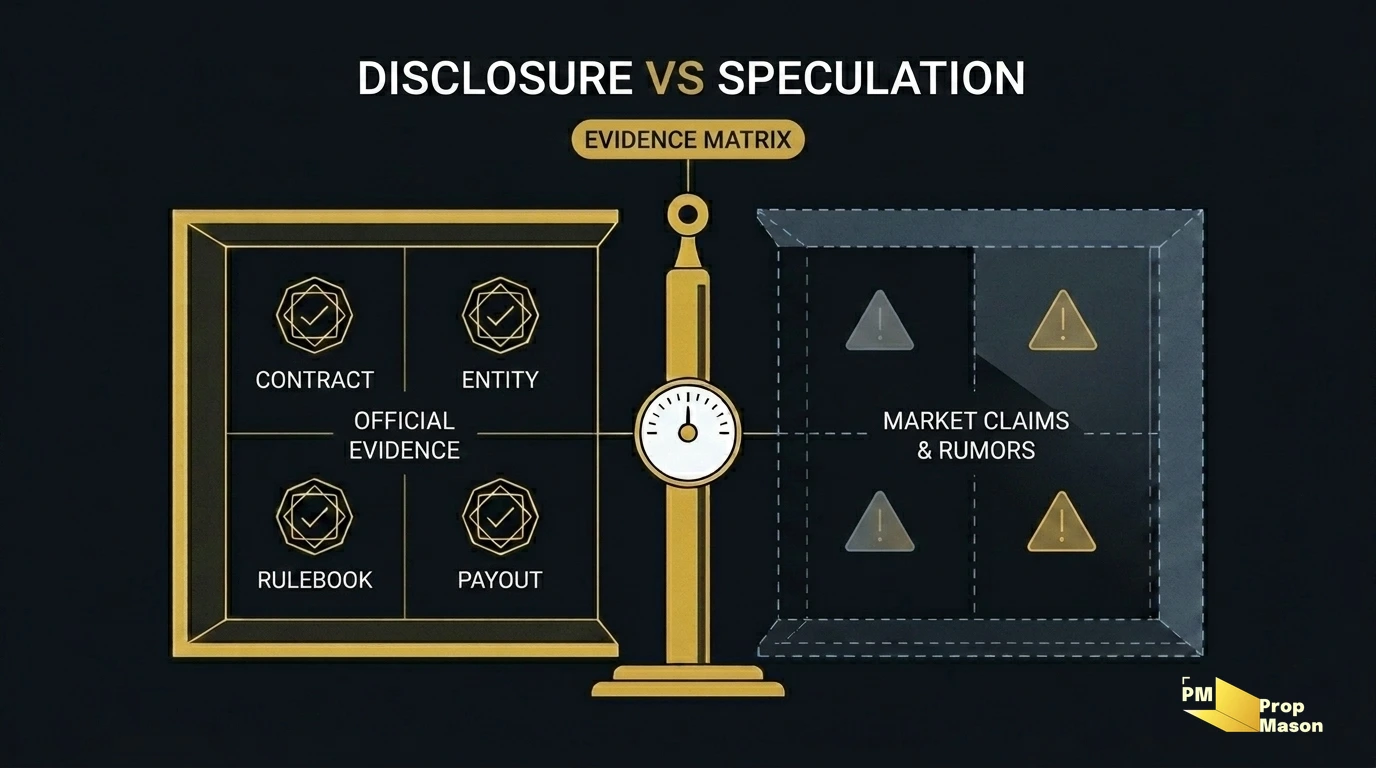
Ask these questions of the firm's own documents for the exact account you plan to buy, and note the date you read each answer.
- Does the firm describe the account as live, simulated, or evaluation-based?
- What do legal terms say about counterparties, execution, and data usage?
- Does the rulebook restrict copy trading, latency, arbitrage, or specific strategies?
- Are payout review and denial reasons explained clearly?
- Is there a conflict-of-interest or risk disclosure?
- What is the official source and access date?
How this fits the Academy learning path
This guide belongs under What Is a Prop Firm?. If account size, evaluations, or funded stages are unclear, start with that guide.
Then read How Prop Firm Evaluations Work. For practical risk review, continue with Prop Firm Drawdown Rules and Prop Firm Payout Rules.
When a firm says nothing about its model
If a firm does not disclose its execution or risk model, treat any A-book or B-book label you see as unconfirmed. Do not infer the model from community reviews, payout screenshots, spread comments, or slippage anecdotes.
If an official source exists, quote the firm's language accurately and avoid over-interpreting it. If sources conflict, note the uncertainty and prioritize the newest official documents.
Common mistakes
The first mistake is assuming A-book is always good and B-book is always bad. Traders need firm-specific terms, not a label.
The second mistake is using rumors as proof. Community reports can guide verification questions, but they are not primary evidence.
The third mistake is ignoring payout and drawdown. Whatever the model is, traders can still fail because of daily loss, consistency rules, KYC, or payout review.
Checklist before drawing a conclusion
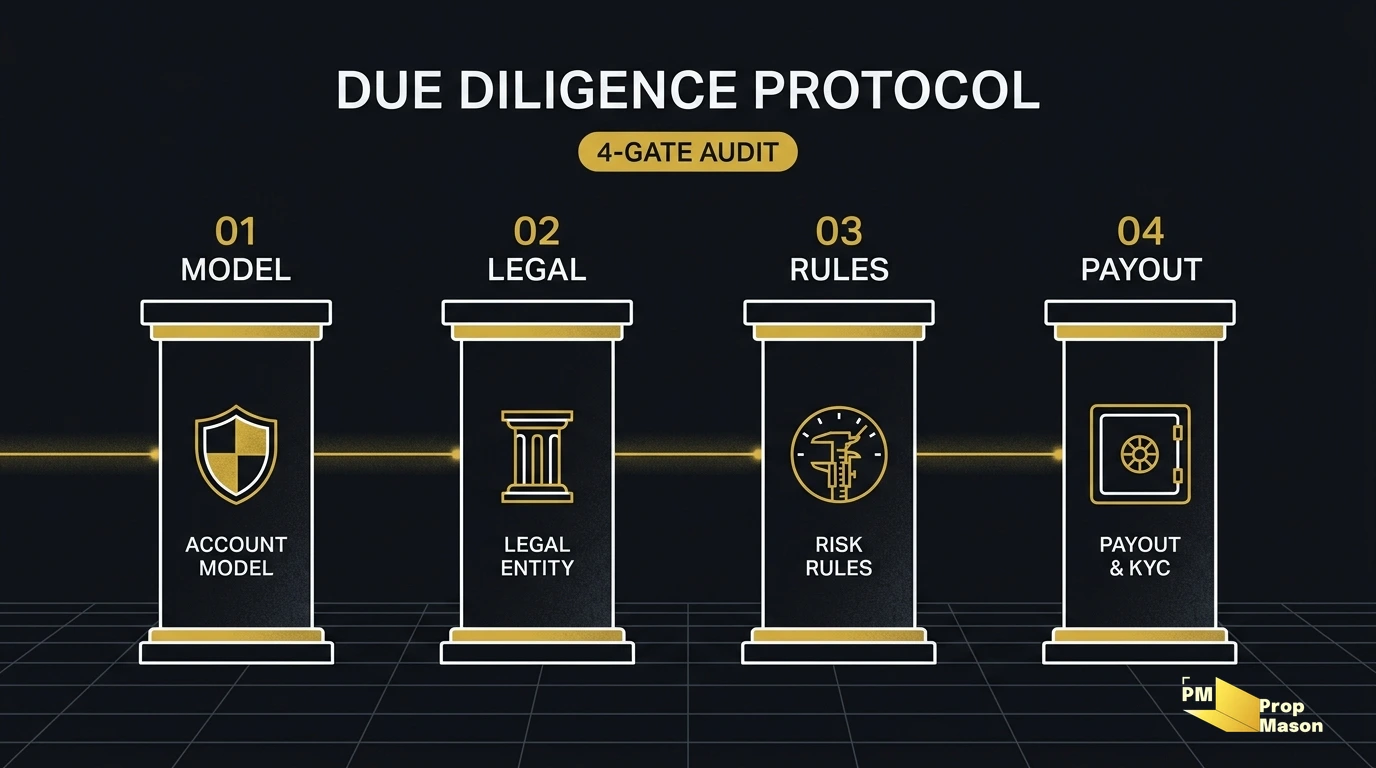
Answer each question from an official source, and write down the page and date, before you describe a firm's model or risk.
- Is there an official model disclosure?
- Do legal terms describe account type and execution?
- Are conflicts of interest or risk disclosures available?
- Are payout denial conditions clear?
- Does the source show a recent update or access date?
- Is the claim you read backed by the firm's own documents, or only by forum posts?
Related Reading
Read next: What Is a Prop Firm?, How Prop Firm Evaluations Work, Prop Firm Drawdown Rules, Payout Terms by Firm, Firm Directory and How We Verify Firm Integrity.
Sources and methodology
This guide relies on each firm's own rulebooks and help pages, read on the dates shown below.
- Because execution and risk-management models can change, traders should verify legal terms, risk disclosures, account descriptions, rulebooks, and payout documents from official sources before making decisions.
- Evidence hierarchy: official documents first; community claims are context or verification questions only.
- This content is educational, makes no unsupported accusation against any firm, and does not promise passing, funding, payout, or profit.
- Funded Trading Plus KYC verification process: the firm calls its funded accounts simulated live and requires KYC before any withdrawal, checked 6 October 2026.
- Funded Trading Plus risk review policy: withdrawal requests from simulated live accounts trigger a risk review, checked 6 October 2026.
Trading futures and forex carries a risk of loss. In the United States, the CFTC and the NFA publish fraud warnings and guidance for traders.
Read how PropMason checks and edits its pages in the editorial policy.
FAQ
What are A-book and B-book?
They are common terms for externally routing risk or internalizing risk, but the details depend on official documents.
Are A-Book prop firms better?
Not necessarily. While operational incentives can differ, an A-book label does not guarantee lower fees, better execution, or approved payouts. The operating model and trading conditions must be verified directly on the firm's official documents.
Should traders choose a prop firm only because it is called A-book?
No. Traders still need to read the rulebook, payout terms, KYC rules, drawdown rules, and legal disclosures.
Can rumors prove that a firm is B-book?
No. If there is no official source, treat it as unconfirmed and avoid firm claims that cannot be verified.
Next step
Use PropMason as a reading checklist: compare operating-model claims, rulebooks, payout rules, and drawdown terms against official sources before choosing a prop firm, including firms that market themselves as A-book prop firms.